Outsmart Uncertainty: How Procurement Teams Build Living Category Strategies
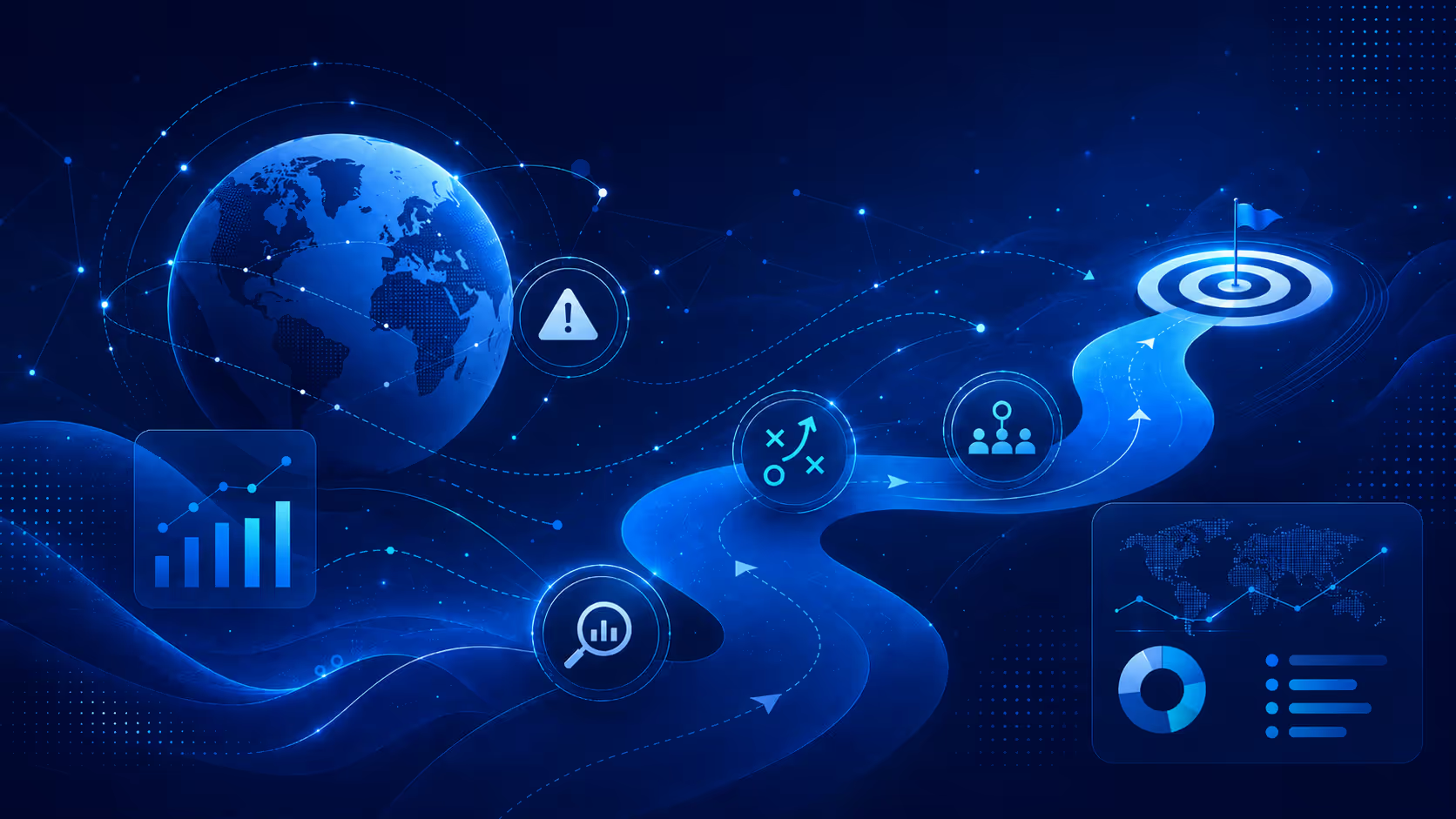

The real shift sits in the way procurement teams think about strategy. Cost still matters, but cost alone no longer defines value. Procurement now needs to protect continuity, strengthen resilience, support sustainability, and help the business make better decisions under pressure.
Watch the full webinar: https://watch.getcontrast.io/register/akirolabs-outsmarting-uncertainty-how-leading-teams-navigate-category-complexity-and-risk?utm_source=website&utm_medium=organic&utm_campaign=outsmarting+uncertainty
Uncertainty becomes part of the operating environment
Procurement teams see repeat patterns in uncertainty. Events across regions and markets keep showing similar effects on logistics, supply availability, lead times, and cost. The lesson is clear: disruption no longer feels like an exception. It becomes part of the environment.
That reality changes the role of category management. A strategy that only reflects historical spend and a once-a-year review cycle cannot keep up. Markets move faster than planning cycles, and by the time a category strategy receives approval, a new event can already change the picture.
Why static category strategies become “zombie strategies”
A category strategy can look complete on paper and still fail in practice. It has slides, saving targets, supplier initiatives, and a roadmap. Yet it does not sense change, it does not adapt quickly, and it does not help teams make better decisions when disruption arrives.
That kind of strategy becomes a zombie strategy: technically alive, but not truly active.
A living category strategy does more than record goals. It stays connected to market changes, risk signals, and business needs. It supports continuous decision-making instead of annual reporting alone.

Cost still matters, but value comes first
Cost remains important. Savings still matter, and boards still ask for them. But cost alone cannot define the full value of procurement.
A cost-first strategy can create exposure. A single-source dependency may look efficient until a disruption blocks supply. Then the low-cost choice becomes expensive. Procurement teams need to ask a sharper question:
Are we optimizing costs, or are we protecting the value of the company?
That shift changes the category strategy conversation. Instead of focusing only on the cheapest supplier or the best price after an RFP, procurement teams also ask:
- How resilient is the supply base?
- How quickly can the team react when something breaks?
- What does it cost if delivery fails?
- How reliable are suppliers?
- How does the category support continuity under pressure?
Cost still matters, but it needs context.
The new procurement mindset: from cost-first to value-driven
A value-driven mindset does not abandon cost. It adds the other value contribution targets that procurement delivers:
- resilience
- continuity
- reliability
- sustainability
- collaboration
- strategic flexibility
This mindset helps procurement teams move from short-term optimization to long-term protection and growth. It also changes how organizations measure success. Savings alone no longer tell the full story. The real goal sits in helping the business adapt, recover, and move forward.
The analyze, strategize, realize framework
A living strategy needs structure. One practical framework follows three connected phases:
1. Analyze
Analysis needs to go beyond spend and contracts. Procurement teams need internal and external signals, including:
- supplier exposure
- market volatility
- geopolitical signals
- risk alerts
- market intelligence
- supplier performance data
Traditional spend analysis shows where the money goes. Modern analysis shows where risk and exposure build.
2. Strategize
The strategize phase needs scenario planning. A strategy should not rely on only one version of the future. Procurement teams need to compare strategic options and understand the trade-offs between them.
Examples of scenario questions include:
- What happens if demand increases suddenly?
- What happens if a supplier faces capacity issues?
- What happens if transport routes become unstable?
- What happens if a region turns risky?
- What happens if sustainability constraints change?
This approach makes strategic options clearer. It also helps teams choose between alternatives such as qualifying a second supplier, changing contract structures, or redesigning specifications.
3. Realize
The realize phase turns the strategy into action. Procurement does not carry this alone. Cross-functional alignment matters.
Finance, supply chain, operations, R&D, legal, and other business functions all need to understand the direction, the trade-offs, and the value levers. Procurement becomes the connector across the business, not only the function that manages suppliers and negotiations.
AI supports analysis, but people make the strategic call
Procurement teams often already hold the data they need. Spend data, supplier performance data, market reports, risk alerts, internal notes, and other signals exist across different systems and formats. The challenge does not sit in the lack of data. The challenge sits in the fragmentation of that data and the speed needed to make sense of it.
This is where AI helps.
AI can:
- read patterns across sources
- summarize context
- detect repeated topics
- connect signals across regions and business units
- accelerate the analysis process
AI should not make the strategic call. The decision belongs to the category team. Human intelligence stays at the center, while AI improves speed, clarity, and confidence.
Scenario planning makes trade-offs visible
Scenario planning helps procurement teams avoid abstract discussions about risk. Instead of saying “we need to reduce risk,” teams can compare concrete options side by side.
That brings sharper questions:
- Do we qualify a second supplier?
- Do we redesign specifications?
- Do we change contract structures?
- Do we accept more flexibility or more resilience, and at what cost?
This is where strategy becomes more mature. Procurement teams do not only choose between efficiency, resilience, or sustainability. They decide consciously what matters most and what the organization can afford in exchange for that choice.
Cross-functional collaboration strengthens execution
A strategy only works when the organization acts on it. That means procurement needs more than insight. It needs governance, leadership support, and the mandate to work across functions.
In practice, this means:
- setting a clear cross-functional governance structure
- bringing stakeholders into the strategy early
- making the business objectives visible
- aligning on key value levers
- reviewing the strategy regularly
- adapting the plan when market conditions change
Procurement becomes the strategic driver of the category and the cross-functional team. That shift changes how the business sees the function.
What organizations gain from stronger procurement strategy
When procurement combines better intelligence, sharper trade-offs, and stronger execution, the organization gains:
- fewer surprises
- earlier risk detection
- less firefighting
- better business conversations
- faster decisions
- stronger continuity under pressure
The result does not stop at savings. The result includes a procurement function that helps the business make better decisions and act with confidence in uncertain conditions.
Final thought
The future of category strategy does not sit in static slides or annual reviews. It sits in living strategies that analyze continuously, strategize through scenarios, and realize through cross-functional action.
In a world of repeated disruption, procurement stays strongest when it moves beyond cost-first thinking and builds value, resilience, and continuity into every category strategy.

Christian Herdelt is Director of Customer Success at akirolabs, where he enables procurement teams to excel with AI-powered digital category strategy. Drawing on procurement transformation experience at Keelvar and IBM, Christian ensures clients realize full value from data-driven collaboration, turning procurement into a strategic, high-impact business partner.





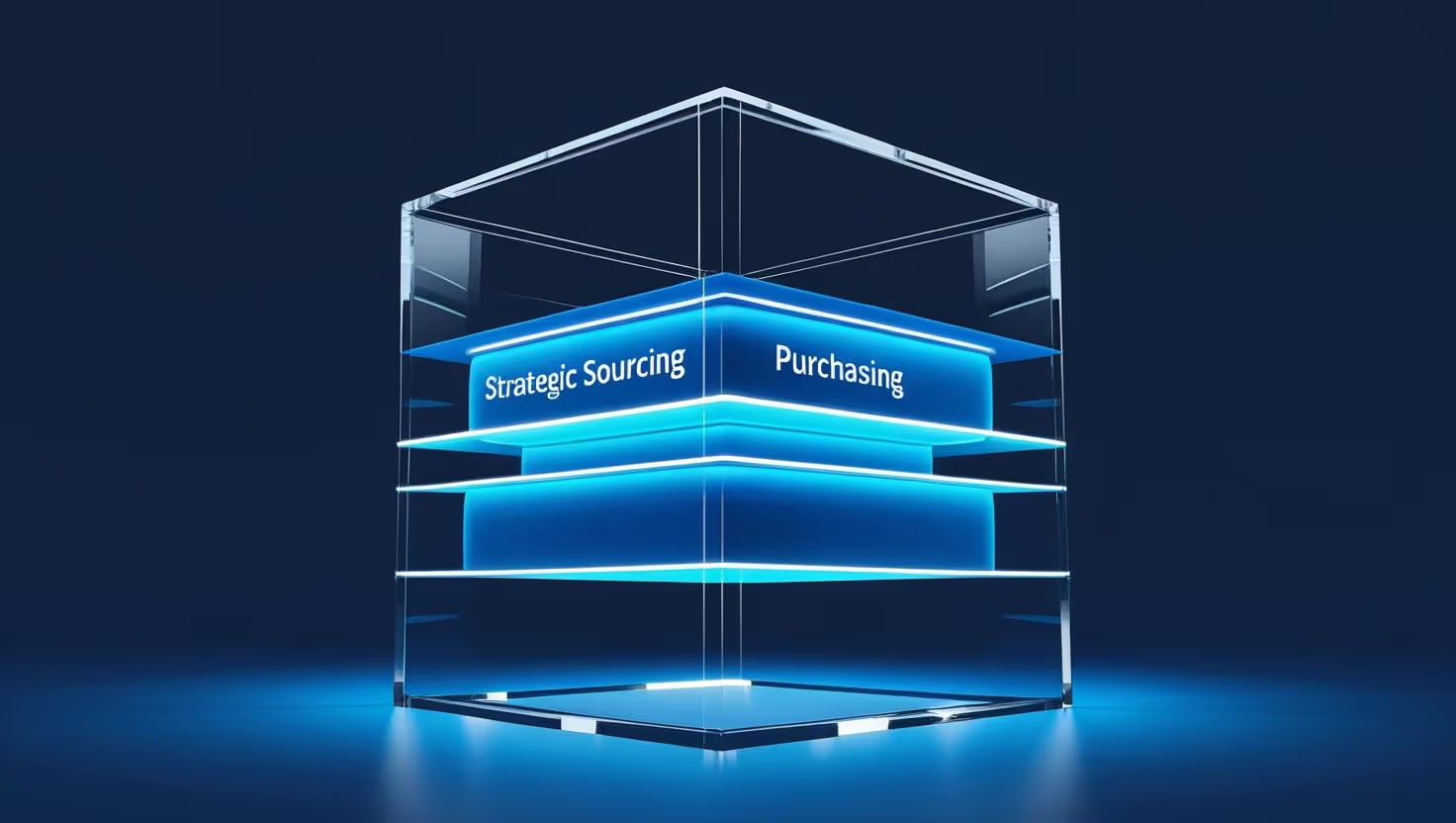

Guide du cycle de vie de l'approvisionnement et de l'approvisionnement stratégiques











6 étapes clés pour améliorer les meilleures pratiques d'approvisionnement de votre entreprise





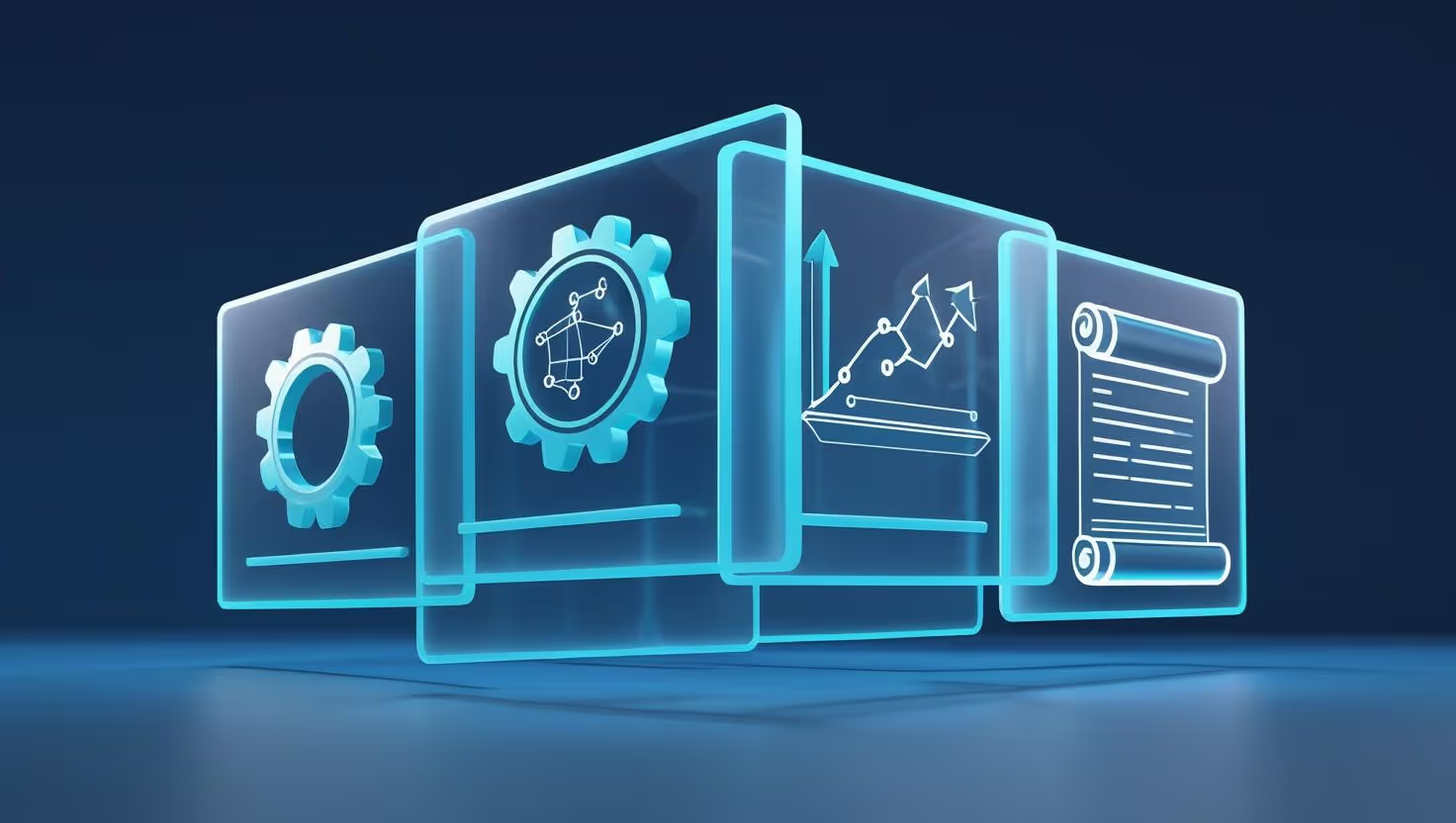






























Les meilleures solutions logicielles de gestion des relations avec les fournisseurs




































.avif)





Qu'est-ce qui fait la réussite d'un projet pilote avec akirolabs ?
Nous définissons le succès en collaboration avec votre équipe. Les résultats typiques incluent la création de stratégies pour les catégories prioritaires, des améliorations mesurables des processus et un alignement interne. Nous fournissons un soutien complet et une feuille de route claire pour l'évaluation.
Puis-je essayer la plateforme de manière pratique après la démonstration ?
Oui, nous proposons des pilotes guidés et des environnements sandbox en fonction de l'étape à laquelle vous vous trouvez dans le processus d'achat. Ils vous permettent, à vous et à votre équipe, d'explorer les fonctionnalités dans votre propre contexte.
Qui devrait assister à la démonstration au sein de mon organisation ?
Nous vous recommandons d'inclure les principales parties prenantes de votre équipe de direction des achats, de votre fonction de gestion des catégories et de vos groupes d'excellence ou de transformation des achats. L'inclusion des parties prenantes commerciales peut également s'avérer utile pour démontrer comment la plateforme facilite la collaboration interfonctionnelle.
Que vais-je voir lors d'une démonstration d'akirolabs ?
Au cours de la démonstration, vous verrez le pupitre de stratégie par catégorie complet d'akirolabs en action, y compris le flux de travail collaboratif, les informations d'AkiroAssist alimentées par l'IA, les fonctionnalités de modélisation de scénarios stratégiques et la fonctionnalité Strategy One-Pager. Nous personnaliserons la démonstration afin de mettre l'accent sur les aspects les plus pertinents pour les besoins de votre organisation.
Puis-je voir comment akirolabs fonctionnerait avec nos catégories spécifiques ?
Oui, nous pouvons personnaliser la démo pour montrer comment akirolabs fonctionne avec vos catégories spécifiques et votre structure d'approvisionnement. Faites-nous part de vos domaines prioritaires à l'avance et nous personnaliserons la démonstration en conséquence.
Combien de temps dure une démo classique ?
Une démonstration standard dure environ 45 à 60 minutes, ce qui permet d'avoir un aperçu complet de la plateforme et de discuter de vos besoins spécifiques. Nous pouvons ajuster le calendrier en fonction de vos disponibilités et de vos centres d'intérêt.
Êtes-vous prêt à transformer votre stratégie d'approvisionnement ?
Il existe une meilleure façon de procéder aux achats. C'est IT.
.avif)